Hey everyone, if you’re running a facility that uses conveying equipment—whether you’re moving boxes in a warehouse, grain on a farm, or raw materials in a manufacturing plant—you know how crucial uptime is. Last week, a client hit me up saying their conveyor went down mid-shift and cost them $12k in lost production. That’s when I realized a lot of folks still skip proper sensor monitoring, assuming their conveyors “just work.” But here’s the thing: sensors don’t just catch problems—they prevent them, save cash, and make your whole operation way smoother. As a conveying equipment supplier, I’ve spent years testing what actually works (and what’s a total waste of money) so I’m breaking down the most useful sensor types you should be using. Let’s dive in. Conveying Equipment

First up, let’s talk about load cells. These are the unsung heroes for tracking how much weight your conveyor is carrying—super important if you’re moving bulk materials like gravel, sugar, or plastics that need consistent throughput. Load cells basically turn force into an electrical signal, right? I’ve seen clients use cheap, flimsy load cells that break within 6 months because they get banged around by heavy chunks of material. The good ones are sealed, stainless steel, and rated for shock loads. For example, if you have a conveyor that’s supposed to move 500 lbs per minute, a load cell will alert you if it’s only moving 300 lbs—no more underfilling orders or overloading the conveyor (which is a fire hazard if you’re moving flammable powders). Pro tip: don’t install load cells where material piles up on top of them—cleaning takes 2 extra minutes every shift, way better than replacing a broken one.
Next, proximity sensors. These are the ones that detect when something is near them without touching—perfect for checking if your conveyor belt is running, if a part is in place, or if there’s a blockage. I’ve had so many clients ignore these only to find out later that their conveyor belt was slipping off the rollers for hours, leading to hours of downtime. There are a few types here: inductive for metal objects, capacitive for non-metal stuff like wood or plastic, and ultrasonic for really tricky materials. Ultrasonic ones are great for dusty environments because they use sound waves instead of light that gets blocked. For grain conveyors, ultrasonic proximity sensors can spot when grain is backing up and clogging the chute before it jams the whole line. Inductive ones are cheap—like $20 a pop—and I recommend putting them on every roller end to make sure no roller stops spinning, which is a common hidden issue.
Then there’s temperature sensors. Conveyors have moving parts: motors, rollers, bearings, even the belt itself. If a bearing overheats, it’ll seize up in minutes—total nightmare. Temperature sensors (usually thermocouples or RTDs) stick to hot spots and send alerts if things get too toasty. I once supplied a system to a food processing plant where a bearing was 180°F instead of the normal 140°F—they replaced it that day, avoiding a $5k motor rebuild. For belt conveyors, you can also use infrared temp sensors that don’t touch the belt, which is handy because belts move fast. Don’t skimp on calibration, though—cheap sensors can read 10° off, which might not seem like much until you miss a bearing failure by an hour.
Vibration sensors are another must-have. If a conveyor is vibrating more than it should, that’s a red flag. It could be a misaligned roller, a loose bolt, or a motor starting to go bad. Vibration sensors pick up even tiny wobbles, which let you fix small issues before they become big ones. I recently installed these on a mining conveyor where the vibration started spiking at 3 AM—turns out a roller bearing was failing, and they fixed it during the next scheduled shift instead of having to shut down for 8 hours at peak production. There are two main types: piezoelectric sensors (good for high-frequency vibrations like motors) and MEMS sensors (cheaper, easier to install on rollers). MEMS sensors are perfect for most operations—they’re small, wireless, and run on batteries for a year.
Now, let’s talk about level sensors. These are for hoppers and chutes that feed your conveyor. If the hopper runs empty, your conveyor is running dry, which can wear out the belt faster (since there’s no material to cushion it). If the hopper overflows, material spills everywhere—messy, wasteful, and a slip hazard. Ultrasonic level sensors are the most common here—they shoot sound waves to measure how full the hopper is. For sticky materials like wet cement, though, ultrasonic might not work because the material can stick to the sensor and throw off readings. In that case, a radar level sensor is better—it works even with sticky or dusty stuff. I once had a client with a wet sand hopper who switched from ultrasonic to radar and cut their waste by 15% because they stopped overfilling and underfeeding.
Wait, let’s not forget speed sensors. These keep track of how fast your conveyor is moving. If the belt slows down or stops unexpectedly, that’s a problem—especially if you’re moving time-sensitive materials like pharmaceuticals or fresh produce. Speed sensors (often tachometers) compare actual speed to the set speed—if there’s a 10% drop, they trigger an alarm. I’ve seen clients ignore speed sensors when their belt stretched a little over time—by the time they noticed, the product was backing up and damaging packaging. Some modern conveyors use encoders, which are super accurate—they can track speed to within 0.1%, which is perfect for precision operations.
Oh, and moisture sensors! If you’re moving materials that need consistent moisture, like grain or wood chips, a moisture sensor on the conveyor lets you check in real time. For example, a farmer moving corn wants it to be 15% moisture for storage—too wet and it molds, too dry and it cracks. Moisture sensors can be inline, so you don’t have to stop production to take samples. I recently worked with a lumber mill that installed these and reduced their wood waste by 12% because they could adjust drying times on the fly.
Now, here’s the part a lot of people mess up: choosing the right sensor for your environment. A factory with high dust needs sealed, IP67 sensors (that’s dust-tight and can handle being hosed down). A cold storage facility needs sensors that work in freezing temps—regular sensors will stop working at 32°F. I once sold a set of cheap sensors to a client in a cold warehouse, and they failed within a month because they weren’t rated for sub-zero temps. Always check the IP rating and temperature range before buying.
Also, don’t just install sensors and forget about them. Calibrate them every 3 months, clean them regularly, and make sure the alarm system is connected to your phone or a central control room—you don’t want an alert that goes to a screen no one checks. A lot of the downtime I see is because sensors are installed but ignored. I recommend setting up alerts for different levels: a warning for minor issues (like a slow roller) and an alarm for critical ones (like a belt about to seize).
As someone who’s been in the conveying equipment game for over a decade, I can tell you this: sensor monitoring isn’t a luxury—it’s an investment. The $500 you spend on sensors now can save you $10k+ in downtime, repairs, and waste. I’ve seen small warehouses that started with just load cells and proximity sensors cut their conveyor-related costs by 40% in the first year. Big manufacturing plants that use a full suite of sensors see even bigger savings.
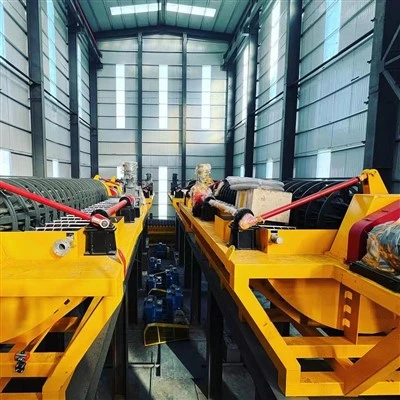
If you’re not sure which sensors make sense for your specific conveyor setup—whether it’s a belt conveyor, screw conveyor, roller conveyor, or something else—hit me up. I can walk you through what’s worked for similar operations, help you pick the right gear, and even share maintenance tips to keep your sensors working. Don’t wait until your conveyor breaks mid-shift—proactive monitoring is way cheaper than reactive repairs.
Conveying Equipment References:
- Conveyor Equipment Manufacturers Association (CEMA). "Belt Conveyor Monitoring Guidelines," 2022.
- International Society of Automation (ISA). "Sensor Selection for Industrial Conveying Systems," 2021.
- Mining Association of Canada. "Preventive Maintenance for Bulk Material Handling Equipment," 2023.
- Food and Agriculture Organization (FAO). "Sensors for Agricultural Conveying Equipment," 2022.
- IEEE Transactions on Industrial Informatics. "Wireless Sensor Networks for Conveyor Condition Monitoring," 2020.
Shandong Zhongyu Industrial Control Technology Co., Ltd.
As one of the most professional conveying equipment manufacturers and suppliers in China, we have world-leading production equipment and strong manufacturing capabilities. Please rest assured to buy customized conveying equipment at competitive price from our factory.
Address: 1-2408, Building B, Huanqi Building, No.165 Xincun West Road, Mashang Street, Zhangdian District, Zibo City, Shandong Province
E-mail: Dave@sdzygk.com
WebSite: https://www.ceramicdiscfilter-zy.com/
