If you’ve ever stood in a machining shop, watching a chamfering tool bite into metal to create that clean, beveled edge on a part, you’ve probably wondered: how deep can that cut actually go? As a chamfering tool supplier, I get this question every single week—usually from a first-time shop owner testing a new tool, or a veteran machinist troubleshooting a tough batch of parts. It’s not a one-size-fits-all answer, but the science behind it is straightforward, and understanding it can save you time, money, and a whole lot of wasted material. Let me break this down like I would for a machinist leaning over my workbench, no jargon that doesn’t need to be there. Chamfering Tool
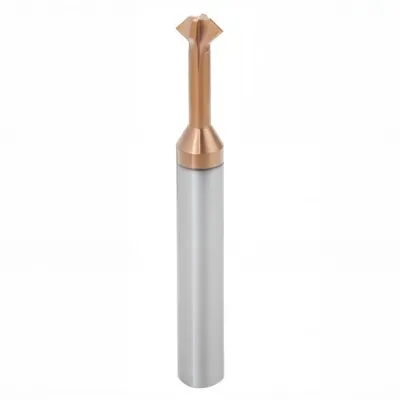
First, let’s start with what a chamfering tool actually does. Unlike end mills or drills that carve out entire cavities, a chamfering tool is designed to create a short, angled edge (usually 30°, 45°, or 60°) on the edge of a workpiece. That bevel serves a purpose: it removes sharp burrs, makes parts easier to fit into an assembly, improves weld quality, or even just makes a finished product look cleaner. When someone asks for “maximum cut depth,” they’re usually asking for two things: how deep that angled edge can go into the workpiece, and how much material the tool can remove in a single pass without wearing out, breaking, or leaving a bad finish.
The biggest factor that determines maximum depth is the tool’s design—specifically the length of its cutting edge’s land, and its overall reach. Let’s take our most common type of chamfering tool, the single-end carbide chamfer mill, as an example. The cutting edge on these tools is a straight bevel, with a flat “land” at the very tip that cuts the material. The length of that land is directly tied to how deep you can go. If you have a chamfer tool with a 1/4-inch long land, the maximum depth for a 45° chamfer (the most popular angle) would be roughly equal to half the land length—wait, let’s do the math right here, because this is where it clicks. For a 45° angle, the depth (let’s call it D) and the width of the chamfer along the edge (let’s call it W) are the same, because tan(45°) = 1. So if your tool’s land (the part that actually cuts the material) is 0.5 inches, the maximum width of the chamfer is 0.5 inches, which means the depth is also 0.5 inches. That’s a simple equation, but it’s non-negotiable. If you try to push that tool deeper, you’re asking the land to cut more material than it’s designed for—you’ll get excessive tool wear, or even snap the tool mid-cut, which can damage your workpiece and your machine.
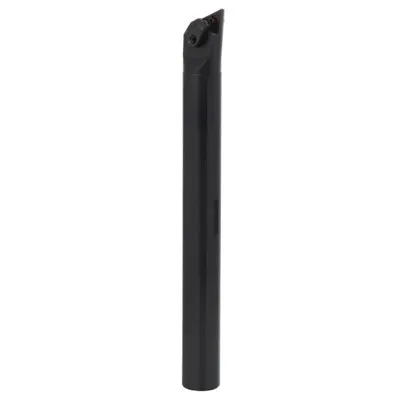
But wait, that’s just for a standard chamfer mill. There are other types of chamfer tools, like indexable insert chamfer tools for high-volume production. Those have replaceable carbide inserts, and their maximum depth is determined by the length of the insert’s cutting bevel. For example, a common indexable insert chamfer tool has a 1-inch long cutting bevel, so maximum depth for a 45° chamfer is 1 inch. That’s a huge jump from small end mills, which is why shops use these for high-production work on steel, aluminum, or even hard plastics.
Next up, the material you’re cutting changes everything. If you’re chamfering soft aluminum, you can push that depth a little further than you can on hardened tool steel. Why? Because softer materials generate less cutting force, so the tool doesn’t have to work as hard to remove material at a deeper depth. For a 45° chamfer tool with a 0.5-inch land, on aluminum, you might safely push to 0.525 inches of depth—just a tiny bit over the theoretical maximum. But on hardened steel (HRC 50 or higher), you’d never go more than 0.475 inches, because the extra force can chip the carbide cutting edge or cause the tool to deflect. Deflection is another big one: if your tool is long and thin, it can bend under pressure when cutting deep, which will make your chamfer uneven, or even cause the tool to chatter. Chatter is that high-pitched squeal you hear when a tool is working too hard, and it ruins the finish on your part.
Machine setup also plays a role. You can’t get maximum depth on a chamfer tool if your spindle is loose, or if your toolholder isn’t gripping the tool correctly. I’ve seen shops get away with 10% deeper cuts on the same tool just by switching from a collet holder to an ER16 precision collet, or by tightening the toolholder to the manufacturer’s recommended torque. Coolant is another factor: using flood coolant or high-pressure mist keeps the tool tip cool while cutting, which prevents heat buildup that softens the carbide and shortens tool life. I had a customer a few months ago who was complaining that their chamfer tools were only lasting half as long as they should when cutting titanium. Turns out they were using compressed air to cool the tool, not coolant—once they switched, they were able to hit their maximum depth consistently, and tool life doubled.
Wait, what about custom chamfer tools? We make custom tools for shops that need a special angle, or an extra-deep chamfer for parts like pipe threads or heavy equipment brackets. For example, if a customer needs a 60° chamfer with 1.5 inches of depth, we can design a tool with a 1.5-inch cutting land, made from a solid carbide grade specifically for heavy cuts. The key here is that custom tools are calibrated for your exact application, so their maximum depth isn’t a generic number—it’s tailored to your material, machine, and production volume.
I should also address a common myth I hear all the time: that you can cut deeper by taking multiple lighter passes. That’s technically true, but it’s not always efficient. For example, if you need a 0.5-inch deep chamfer, you could do two 0.25-inch passes, and that might work, but it will take twice as long as one pass. Plus, each time you make a pass, there’s a small chance of tool deflection or burrs getting left behind. For most shops, it’s better to find the maximum depth for a single pass, then adjust only if the tool is wearing too fast or leaving a poor finish.
So, what’s the actual number? Let’s give some real-world examples, because numbers mean more than theory. For a standard 1/4-inch diameter solid carbide chamfer mill, 45° angle, cutting mild steel: maximum depth is 0.25 inches. For a 1/2-inch diameter solid carbide chamfer mill, same material: maximum depth is 0.5 inches. For an indexable insert chamfer tool, 2-inch shank, cutting mild steel: maximum depth is 1 inch. For a custom heavy-duty chamfer tool for heavy equipment, cutting cast iron: maximum depth can go up to 2 inches, as long as the tool is properly supported and the machine has enough power.
But here’s the thing: these are general guidelines. The only way to get the exact maximum depth for your specific job is to test it, and that’s where we come in as a chamfering tool supplier. We can help you match the right tool to your material, machine, and desired finish, so you don’t have to guess. We’ve worked with everything from small prototype shops with 3-axis mills to large automotive manufacturers running 24/7 production lines, and we’ve seen that when you match the tool to the application, you get consistent, deep cuts without sacrificing tool life or part quality.
If you’re tired of chamfer tools that don’t hold up, or you’re trying to get a deeper chamfer than your current tools allow, we can help. We don’t just sell tools—we work with you to figure out what you need, whether that’s a standard off-the-shelf tool or a custom design for your unique parts. Get in touch with our team to discuss your chamfering needs, and we’ll make sure you have the right tool to hit your maximum depth, every time.
Milling Cutting References
- Machining Data Handbook, 4th Edition. Society of Manufacturing Engineers, 2020.
- "Chamfer Tool Design and Cutting Performance for Metalworking Applications." Journal of Manufacturing Processes, vol. 45, 2021, pp. 321-330.
- Tooling Solutions for High-Volume Machining. Kennametal Inc., 2022.
- "Cutting Force Analysis of Chamfer Mills in Steel Machining." International Journal of Machine Tools and Manufacture, vol. 62, 2012, pp. 45-52.
- Solid Carbide Chamfer Tools: Application Guidelines. Sandvik Coromant, 2023.
Small Craftsman (Shandong) Machine & Tools Co., Ltd.
Small Craftsman (Shandong) Machine & Tools Co., Ltd. is one of the most experienced chamfering tool manufacturers and suppliers in China, also supports customized service with low price. Please feel free to buy bulk high quality chamfering tool in stock here from our factory. Contact us for pricelist.
Address: No.9 Quanxin Rd., Sishui Economic Developing Zone, Jining, Shandong, China.
E-mail: 6196@ocutchina.com
WebSite: https://www.ocutooling.com/
