Hey there, if you’ve ever shopped around for AC servo motors for your manufacturing line, robotics setup, or CNC machine, you’ve probably seen two main types thrown around: synchronous and asynchronous. I’m a supplier who fields this question at least three times a week, so let’s cut the jargon and break this down like I’d explain it to a buddy who’s just starting to dip their toes into motion control. No stuffy textbooks, no overly technical fluff—just real, actionable stuff you can use when you’re picking the right motor for your job. AC Servo Motor
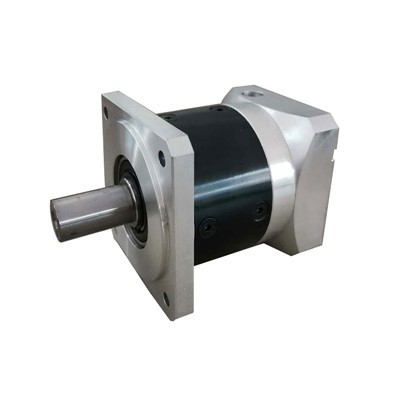
First, let’s get the super basics out of the way. Both are AC motors, so they run on alternating current, which is what powers most industrial gear. Both turn electrical energy into mechanical rotation, which is the whole point of a servo motor: you need precise control over speed, position, and torque, not just a motor that spins endlessly. But the similarities pretty much stop there, right down to how their inner parts work. Let’s start with synchronous motors, since those are the ones most of my customers come to me asking about for high-precision work.
A synchronous AC servo motor’s rotor (the spinning part that turns the shaft) locks in sync with the frequency of the AC current feeding it. Think of it like a dance partner: every step you take (that’s the current frequency), the rotor takes the exact same step, no lag. How does it do that? Most of the time, it’s got permanent magnets embedded in the rotor. No extra parts needed for the rotor to create a magnetic field—those magnets do all the heavy lifting once they’re magnetized. That’s a big reason they’re so popular: no need to supply extra power to the rotor, which makes them more efficient than their asynchronous cousins in most cases.
Wait, let’s make sure I get that right. Asynchronous motors, on the flip side, have rotors that don’t spin in perfect sync with the current frequency. They rely on induction, which means they “induce” a magnetic field in the rotor from the stator (the stationary part with the wire windings) instead of having permanent magnets. That’s why you’ll also hear async motors called induction servo motors. So the rotor lags a little behind the stator’s magnetic field—that’s where the “slip” comes in. Slip is normal, it’s how they work, and that’s a key difference when you’re talking about control.
Now let’s dive into the practical stuff, because that’s what actually matters when you’re buying a motor. Let’s talk about precision first, since that’s the whole deal with servos. Synchronous motors are the clear winners here, hands down. Because the rotor locks right to the current’s frequency, you get dead-on position control, super smooth speed regulation, zero lost motion between commands. I’ve got a customer who builds medical robots that operate on micros level precision—they’d never use an async motor. If you need to move a surgical instrument exactly 0.1 millimeters, or hold a steady speed while a robot arm lifts 50 kilos without wobbling, synchronous is the way to go. The lack of slip means you get instant, accurate feedback on where the shaft is, which makes tuning your motion controller way easier too.
What about torque? Let’s break that down into low-speed and high-speed torque, because that’s a huge point most people miss. Synchronous motors deliver way more torque at lower speeds without needing to gear them down, right? That makes them perfect for applications like machine tools, where you need a lot of force at slow speeds to cut metal or engrave parts. They also can handle high peak torque really well, which is what happens when a robot has to accelerate fast or lift a heavy load suddenly. Async motors, on the other hand, tend to have lower efficiency at lower speeds, and their torque drops off more sharply as you get slower. They’re designed more for high-speed, constant-load applications, not the high-torque, low-speed stuff.
Wait, let’s not sleep on async motors, because they still have their place. A lot of people write them off, but they’re not obsolete. Async motors are generally cheaper to manufacture, right? No permanent magnets (which can be pricey, especially with supply chain issues the last few years) so the upfront cost is lower. They’re also more durable in harsh environments—more resistant to temperature spikes, vibration, and dust than some synchronous motors, because they have fewer sensitive parts in the rotor. That’s why I sell a lot of async motors for conveyor systems or packaging lines where you just need a consistent spin, not laser-precise positioning. If you’re moving boxes down a line at a steady speed, spending less on a motor that gets the job done is a win, no need to overpay for synchronous precision you don’t need.
Now let’s talk about efficiency, that’s a big one for operating costs over the life of the motor. Synchronous motors are way more efficient across almost every load range, especially at lower speeds. Because there’s no slip loss (that energy lost in async motors from the rotor lagging), you waste less electricity, which adds up big time for motors that run 24/7. I’ve had customers switch from async to synchronous motors on a packaging line, and they reported a 15-20% drop in their electricity bill within a quarter. Async motors are less efficient, but they make up for it sometimes with their lower upfront cost, especially for smaller, lower-demand applications.
Control complexity is another thing. You might think both are controlled the same way, but nope. Synchronous motors need a position or speed sensor (usually an encoder) to keep track of where the rotor is, right? Because you need to make sure it’s locked in sync, so the controller has to send the right current at the exact right time. That adds a little cost to the motor and the control system, but it’s worth it for precision. Async motors don’t always need encoders—some can run open-loop, meaning the controller just sends current and doesn’t need constant feedback on the rotor’s position. That simplifies things a lot for basic applications, no extra wiring or setup needed.
Wait, let’s address some common myths I hear all the time. A lot of guys will say “synchronous motors are only for small, low-power applications” and “async can’t handle high speeds” — that’s outdated. Modern synchronous motors come in all sizes, from tiny ones for drone arms to big 100+ kilowatt models for large industrial robots. And async motors? Yeah, they can spin super fast, but they’re not as smooth at those high speeds because of the slip, so they’re not ideal for precision high-speed work like CNC milling where you need consistent tool movement.
Another big point: heat. Because async motors have slip, they generate more heat, especially when running at low speeds or high loads. That means you need more cooling, either built-in fans or extra heat sinks, which adds to the size and cost. Synchronous motors run cooler across most load ranges, so they can be more compact for the same power output. If you’re working with limited space (like inside a robot arm or a compact CNC machine), that’s a huge deal—less heat means less wear and tear, longer motor life.
Now, when should you pick which one? Let’s make this concrete, no vague advice. Go for a synchronous AC servo motor if: you need precise position control (like robotics, medical devices, CNC, semiconductor manufacturing), you need high torque at low speeds, you care about long-term energy efficiency, you need smooth, low-vibration operation, and you don’t mind paying a little more upfront for better performance.
Go for an asynchronous AC servo motor if: you’re on a tight budget, you need a motor for constant-speed, non-precise applications (conveyors, packaging lines, simple automation), you need something durable in harsh industrial environments, and you don’t need fancy position feedback or high torque at low speeds.
Wait, let me add a real example from my own business to make this feel less like a textbook. Last year, I had two customers reach out within a week of each other, both needing motors for new setups. One was a guy who builds collaborative robot arms for small businesses—he needed motors that could hold a pen steady while drawing custom labels, and lift 10kg without jitter. We recommended synchronous motors for all six axes, and he came back a month later saying the precision was way better than the old ones he used, and he was saving $300 a month on power. The other customer was a local soda bottling plant, needing motors to run the conveyor belts that move bottles from the filler to the capper. They were using async motors that kept burning out every six months because of the heat, so we swapped them for high-grade async models with better cooling, and they haven’t had an issue since—plus the upfront cost was half what a synchronous setup would’ve been, which fit their tight capital budget.
I’ve also had customers try to mix and match, like putting an async motor on a rotary axis that needed to index parts exactly. That never works—they get slip, the parts are off by a few millimeters, and they have to go back and buy a synchronous motor anyway. Don’t do that, save yourself the headache.
Now, let’s wrap this up so it’s clear, no matter what your application is. The main differences boil down to three core things: rotor design (permanent magnets vs induction), precision and control, and cost and use case. Synchronous is for high-precision, high-performance jobs where you want reliability and low operating costs long-term. Asynchronous is for simple, low-budget, constant-speed jobs where durability is key.
If you’re still not sure which one is right for your setup, hit me up. I’ve been in the servo motor game for years, worked with every type of application from small startups to big factories, and I can help you figure out exactly what you need, no sales pitch, no pressure. Whether you need a single replacement motor or a full system for a new line, I’ve got the specs and options to fit your budget and performance needs. Just reach out and we can chat through your requirements, no complicated paperwork required.
AC Servo Motor REFERENCES
- Bose, B. K. (2006). Modern Power Electronics and AC Drives. Prentice Hall.
- Pillay, P., & Krishnan, R. (1989). Application characteristics of permanent magnet synchronous and brushless DC motors for servo drives. IEEE Transactions on Industry Applications, 25(3), 351-360.
- Lipo, T. A. (2012). Introduction to AC Machine Design. Wiley-IEEE Press.
- Miller, T. J. E. (1989). Brushless Permanent-Magnet and Reluctance Motor Drives. Oxford University Press.
- Acarnley, P. P. (2002). Speed Sensors and Signal Conditioning for AC Drives. CRC Press.
Zibo Auric Mechanical and Electrical Technology Co., Ltd.
As one of the leading ac servo motor manufacturers and suppliers in China, we warmly welcome you to buy advanced ac servo motor for sale here from our factory. All customized motors are with high quality and competitive price.
Address: B419, High-tech Entrepreneurship Park, High-tech Zone, Zibo City
E-mail: cui@auricmotor.com
WebSite: https://www.auricmotor.com/
