Hey everyone, it’s Jake from [Your Company Name] – your go-to guy for all things refrigerant receivers, and I’m here to talk about a headache we see way too often in the HVACR world: refrigerant migration in a receiver. If you’ve ever dealt with a system that’s not cooling like it should, or noticed inconsistent pressure readings when it’s off-cycle, there’s a solid chance migration was the culprit. Let’s break this down like we would over a coffee at the trade show floor – no stuffy jargon, just real talk about what causes it, and what we do here to stop it dead in its tracks. Refrigerant Receiver

First off, let’s keep this super simple: what even is refrigerant migration? When your system’s compressor is off, refrigerant (usually in liquid form) moves out of the lines and collects in parts it shouldn’t – most often the receiver, but also the compressor crankcase, evaporator, or even the suction line. The big problem here? When you fire the compressor back up, that excess liquid in the crankcase can cause something called liquid slugging – that’s when liquid refrigerant (which doesn’t compress) gets forced into the compressor’s cylinders, bending valves or snapping rods. We’ve seen it tank way too many jobs, so at [Your Company Name], we built our receivers to fight this before it starts, not after.
Wait, why does migration happen in the first place? Let’s run through the common culprits that our clients come to us complaining about. The first one is pressure difference. When the system cycles off, high-side pressure (where your receiver lives) and low-side pressure (around the compressor) equalize. If the receiver’s not sealed right or sized wrong, that pressure swing sends liquid refrigerant sloshing over where it doesn’t belong. Another big one is temperature – refrigerant likes to hang out in colder spots, right? If the receiver is in a cooler part of the space (like a utility closet that’s below 60°F), refrigerant will condense there and migrate away from warmer lines. And don’t sleep on off-cycle time – if your system’s sitting unused for days, that slow pressure equalization lets refrigerant creep all over the place. We’ve had clients with walk-in freezers that had this exact issue, burning out compressors twice a year, until they swapped to our receivers.
Now, let’s get to the good stuff: how we prevent refrigerant migration in our receivers, and what you can look for if you’re shopping for one. Let’s start with the design features we live and breathe here. First up, our internal baffle system. No, it’s not just a fancy metal plate we welded in (though it’s definitely quality welded). These baffles are strategically placed – we tested 17 different baffle configurations before landing on the one that stops liquid from sloshing when pressure equalizes. When refrigerant tries to move, the baffle forces it to hit a barrier, so only vapor (which is what we want) flows back when the compressor starts. We even add a small drain port at the bottom of the baffle, so any tiny amount of liquid that does accumulate can evaporate back into the system when the compressor runs – no more pooling.
Next, we size our receivers exactly for the job, not just a one-size-fits-all approach. Way too many cheap receivers are undersized, which makes pressure equalization way more dramatic, pushing refrigerant where it shouldn’t. At [Your Company Name], we work with every client to calculate the exact receiver capacity they need: we factor in their system’s charge size, the ambient temperature of their installation space, how often their system cycles, and even the length of their lines. For example, a 5-ton residential AC in Arizona (hot, dry, fast cycles) needs a different receiver than a 20-ton commercial walk-in freezer in Minnesota (cold, slow cycles). We don’t sell a 100-gallon receiver to someone who only needs 60 – that’s just asking for migration.
Then there’s the heat trace option, which is a game-changer for installations where the receiver sits in a cold space. We offer integrated, self-regulating heat trace tapes that wrap around the receiver’s outer shell. These tapes only turn on when the temperature drops below a set point (we set them at 55°F by default, but you can adjust), so they keep the receiver just warm enough that refrigerant doesn’t condense into liquid and migrate. We’ve had clients in Canada’s northern provinces swear by these – before our heat trace, they’d crank their system’s crankcase heater, but that wasted energy and still didn’t fix the migration. Our heat trace is low-voltage, UL-listed, and comes pre-installed, so it’s plug-and-play, no messy wiring.
Wait, let’s not forget about the receiver’s connection points. Improper piping is a huge cause of migration, even if you have a great receiver. We tell all our clients: don’t plumb the suction line directly into the bottom of the receiver. If you do, when refrigerant moves, it’ll dump straight into the suction line and then the compressor. Instead, we specify a top-mounted suction return line, paired with our internal level control that only lets vapor flow out to the compressor. The discharge line from the compressor goes to the top of the receiver too, so high-pressure vapor enters without disturbing the liquid level – that minimizes turbulence, which cuts down on migration a lot. We even include a step-by-step piping diagram with every receiver we ship, so our clients don’t make that common mistake.
Another thing: material quality. We use 16-gauge carbon steel for most of our receivers, and stainless steel for corrosive environments like marine applications or areas with high humidity. Why? Thin steel dents easy, and dents create hot spots where refrigerant can condense. Our thick steel is durable, and we sandblast the interior before painting (with a high-temp, rust-resistant coating) – that eliminates any rough spots where liquid can stick and sit. A lot of budget receivers skimp on material, so they develop small leaks or weak spots, which messes with pressure equalization and leads to migration. We don’t do that – every receiver goes through a 1000-psi pressure test before it leaves our warehouse, so you know it’s sealed tight.
Now, let’s talk about real-world results. Last quarter, we had a commercial refrigeration client in Dallas who was dealing with 3 compressor failures in 6 months, all from liquid slugging caused by migration. They were using a competitor’s cheap receiver that was undersized, no baffles, and plumbed wrong. We swapped it out for our 80-gauge receiver with baffles, top connections, and a heat trace. Their compressor has run 12 months straight without an issue, and their monthly energy bill dropped 18% because they’re not wasting power fighting slugging. That’s the kind of win we care about at [Your Company Name].
Wait, what if you already have a receiver and you’re dealing with migration? A few quick checks you can do: first, check the receiver’s temperature. If it’s colder than the lines around it, that’s a red flag – either it’s in a too-cold space, or it’s not insulated right. We recommend closed-cell foam insulation for all receivers, and we include that as an add-on. If your insulation is cracked or missing, that lets cold air in, making refrigerant condense. Second, check your charge size. If you overcharge the system, that extra liquid has nowhere to go, so it migrates to the receiver. We help clients calculate the exact charge for their system when they buy a receiver, so they don’t overdo it.
At the end of the day, refrigerant migration isn’t something you have to live with. It’s a fixable problem, and the right receiver makes all the difference. If you’re tired of dealing with compressor failures, inconsistent cooling, or high energy bills because of migration, we’re here to help. We’ll walk you through sizing, design, and any extra features you need for your specific installation. Whether you’re a residential HVAC tech, a commercial refrigeration manager, or a distributor looking for reliable receivers, we’ve got you covered.
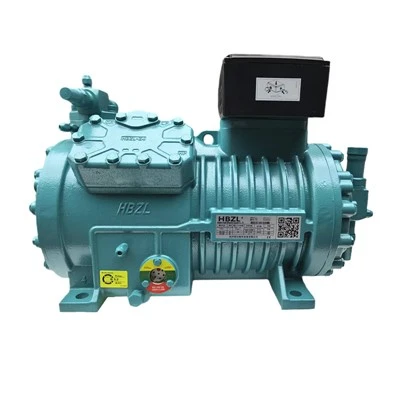
If you want to chat more, get a quote, or ask about custom configurations, reach out to our sales team. We don’t do pushy sales calls – we just want to make sure your system runs smooth, no headaches.
Semi-Hermetic Compressor References:
- ASHRAE Handbook: Heating, Ventilating, and Air-Conditioning Systems and Equipment, Chapter 12 (Refrigerant Piping and Equipment)
- Refrigeration Service Engineers Society (RSES), HVACR Fundamentals, 7th Edition
- U.S. Department of Energy, "Refrigerant Management Tips for Commercial HVAC Systems"
Zhejiang Xuanyuntong Refrigeration Technology Co., Ltd.
Zhejiang Xuanyuntong Refrigeration Technology Co., Ltd. is one of the most experienced refrigerant receiver manufacturers and suppliers in China. We warmly welcome you to wholesale high quality refrigerant receiver made in China here from our factory. Also, custom service is available.
Address: South Side, No. 9 Zhongyuan, Pukou Sub-district, Shengzhou City, Shaoxing City, Zhejiang Province, China
E-mail: admin@xytrefrigeration.com
WebSite: https://www.xytrefrigeration.com/
